
Enticing Healthy Eating is a quiet corner of the web devoted to good food made simply.
The site gathers recipes, ingredient notes, and gentle guidance for anyone who wants to bring a little more nourishment to the table. Browse at your own pace, and take what serves you.
One-bowl banana oatmeal cookies with dark chocolate
One-bowl banana oatmeal cookies with dark chocolate ask very little of the cook and give a lot back: crisp at the edges, chewy through the middle and fragrant enough to fill the kitchen with cinnamon. The bananas do the sweetening, the oats bring texture, and a scattering of dark chocolate turns each one into an afternoon tea favourite.
The appeal is also the method. There is no mixer, no melted butter and no chilling time; everything is mashed and stirred in one bowl before it goes onto a lined baking tray. The result is a forgiving recipe for beginners, busy households and anyone who wants homemade treats without turning the oven on for hours.
Why the one-bowl method works
The texture comes from balance rather than precision. Banana supplies moisture and softens the centre, rolled oats absorb some of that moisture while keeping a pleasant bite, and a little flour gives the cookies enough structure to hold their shape. Because there is no creaming stage, the dough is mixed quickly, but it still benefits from resting for a few minutes before baking.
| Oat choice | Expected texture | Best use |
|---|---|---|
| Traditional rolled oats, 190 g | Visible flakes, firm chew and crisp edges | The best all-round choice and the one used in the base recipe |
| Quick oats, 190 g | Softer, finer and more cake-like | Use when you prefer a tender crumb with little oat texture |
| Oat flour, 240 g | Compact, dense and slightly sandy | Replace the oats and flour for a flour-free style |
Using the same bowl keeps the process streamlined. You can taste the mashed banana, add a spoonful of nut butter if the dough seems dry, and decide how much chocolate to fold through without washing another bowl. These choices make the base recipe easy to remember rather than technical, which is how a reliable home bake should feel.
Choosing bananas, oats and chocolate
Ripe bananas are the key to both flavour and texture. The darker and softer they are, the more sweetness they bring, while some natural banana flavour remains for the chocolate to balance. Australians usually buy bananas in bunches at the greengrocer or as singles at the supermarket, so look for spotty fruit rather than waiting for perfectly yellow bananas. One overripe banana can be mashed into the dough even when the rest are only ready for eating.
Most Australian recipes use metric measurements, and a standard Australian measuring cup holds 250 mL. That makes the cup quantities easy to scale, although weighing the oats and flour gives more consistent cookies. Traditional rolled oats, including brands such as Uncle Tobys, are readily available during a quick run to Coles or Woolworths—what many people call a “Woolies run”. Avoid instant porridge oats unless you want the cookies to lose their characteristic oat texture.
Dark chocolate should be chopped rather than bought as neat chips if you want distinct, melted pockets in the baked dough. A 70 per cent dark chocolate baking block offers a good balance of bittersweet flavour and enough sweetness, while semi-sweet chocolate produces a milder result. Milk or white chocolate will also work, but the darker varieties create the richer contrast intended for these cookies.
Mixing and portioning the dough
This formula makes about 10 to 12 medium cookies, or 8 generous ones.
- 2 very ripe bananas, about 240 g
- 1 1/2 cups or 190 g traditional rolled oats
- 3/4 cup or 95 g plain flour
- 1/2 cup or 75 g smooth natural peanut butter
- 1 large egg
- 1 teaspoon vanilla extract
- 1/2 teaspoon ground cinnamon
- 1/2 teaspoon baking powder
- 1/4 teaspoon fine sea salt
- 100 g dark chocolate, roughly chopped
Mash the bananas thoroughly in a large bowl, breaking up the larger pieces so the mixture is smooth without being watery. Add the peanut butter, egg and vanilla, then stir in the oats, flour, cinnamon, baking powder and salt. Mix until no dry pockets remain, but avoid overworking the dough. Fold through the chopped chocolate at the end so the pieces stay distinct.
Use the prepared batter straight from the bowl, or cover and leave it at room temperature for up to two hours. Portion with two tablespoons of dough and shape each one into a slightly flattened ball. Place the cookies about 5 cm apart on a lined baking tray, as they will spread a little during the first few minutes in the oven.
Baking for crisp edges and chewy centres
Heat the oven to 180°C conventional or 160°C fan. Australian ovens are measured in Celsius, and the fan setting usually requires the lower temperature because the fan circulates heat more efficiently. A hot tray encourages the bottoms to set quickly while the centres remain soft.
Bake the cookies for 12 to 15 minutes, depending on their size. They are ready when the edges look set and lightly golden and the centres still appear slightly soft. If the chocolate is very dark, the baked surfaces can look paler than expected, so judge doneness by texture rather than colour alone.
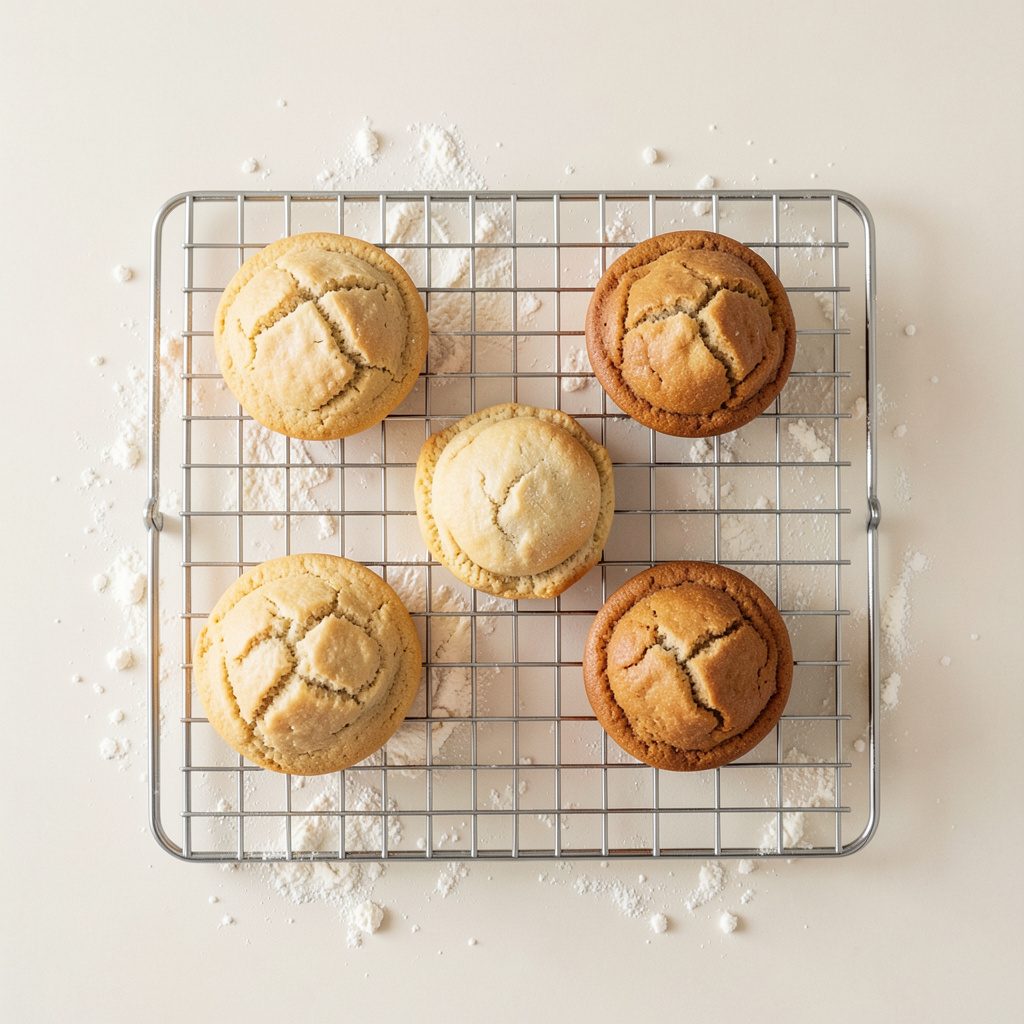
Transfer the tray to a wire rack and leave the cookies to cool for at least 10 minutes. They will continue to firm as the residual heat escapes. Cutting one open while it is hot will reveal a soft, almost fudgy centre; after cooling, that centre becomes pleasantly chewy while the outer edge keeps its gentle crunch.
Swapping flavours without losing the formula
The peanut butter can be replaced with another smooth nut or seed butter, including cashew, almond or sunflower seed butter. Sunflower butter is useful for a nut-free version, although it has a milder flavour than peanut butter. Avoid chunky butters because they can leave the dough uneven, and choose varieties without added sugar so the bananas remain the main source of sweetness.
Dark chocolate is the most satisfying option, but the flavour can be adjusted with a teaspoon of orange zest, a pinch of cardamom or a spoonful of cacao nibs. Milled nuts, shredded coconut and chopped dried fruit also mix well, provided they are added before the chocolate. Keep any added liquid to a minimum because extra milk or oil can make the cookies spread and lose their shape.
For a gluten-free adaptation, use certified gluten-free oats and replace the plain flour with oat flour. Add a tablespoon of milk if the dough feels stiff, then chill the portioned cookies for 10 minutes before baking. Ordinary oats may contain traces of wheat, so they are not suitable for coeliac cooking unless the packet carries suitable certification.
Serving, storing and sharing the batch
Once cooled, the cookies can be kept in an airtight container for up to five days. Place a sheet of baking paper between layers if stacking them, and refresh them in a low oven if they become slightly soft. They also freeze well for around two months; freeze the baked cookies flat, then transfer them to a sealed container. Thaw one at room temperature when a soft centre is wanted.
These are sturdy enough for an Australian school or work lunchbox without the crumbs that shortbread tends to create. For a fuller workday lunch, the better grain bowl method can supply the vegetables and grains, while one of these cookies adds a chewy chocolate treat. They are equally good beside a cuppa in the arvo or served warm with cold milk.
Bake a batch today, keep one for your afternoon tea and share the rest while the chocolate is still meltingly good.
From the kitchen
Stay close to the kitchen
Sign up for occasional notes, seasonal recipes, and gentle reminders to cook something good.